


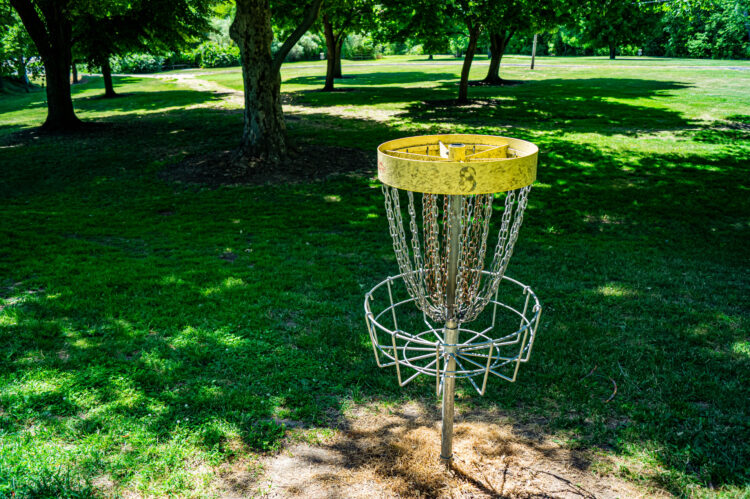
When competing recreational sports organizations escalated their dispute over shared public park space to political mobilization and media warfare, the conflict threatened to divide an entire community. Sports Conflict Institute was engaged to de-escalate tensions and facilitate a solution that would allow multiple user groups to coexist while pursuing their respective athletic goals in a contested urban green space.
Situation Overview
A fifteen-year aspiration of a disc golf association to develop a championship-caliber course in a popular urban park had reached a crisis point. The proposed development faced opposition from an established running club that utilized the same trails and spaces for training and events. What began as disagreement over land use had escalated into public accusations, with the disc golf association publishing inflammatory editorials accusing runners of obstructionism, while the running community mobilized political connections to block the development. The park also served cyclists, families, and other recreational users, creating a complex web of competing interests. Years of informal negotiations had failed, positions were entrenched, and both organizations were prepared for protracted political and legal battles that would damage community relationships.
The Challenge
The conflict had deteriorated from substantive disagreement to personal animosity. Both organizations had shifted from interest-based problem-solving to rights-based arguments and power-based tactics, making collaborative resolution seemingly impossible.
Conflict Escalation Factors:
- Public editorial attacks had personalized the conflict and hardened positions
- Political mobilization created win-lose dynamics with reputational stakes
- Fifteen years of failed attempts had created deep skepticism about resolution
- Multiple unrepresented stakeholder groups affected by any decision
- Misconceptions about each group’s actual needs and safety concerns
Without intervention, the community faced years of divisive conflict, potential litigation over public land use, permanent fracturing of the recreational sports community, and continued inability to optimize valuable public space for multiple users. The dispute threatened to consume resources better spent on facility improvements and programming.
The SCI Approach
SCI implemented a systematic multi-stakeholder mediation process designed to shift the conflict from positions to interests, de-escalate emotional tensions, and create sustainable agreements that would benefit all park users.
Structured Mediation Process
Phase 1: Comprehensive Stakeholder Assessment
Conducted confidential intake interviews with leadership from both primary organizations. Identified and interviewed additional affected stakeholders including cyclists, municipal officials, and neighborhood groups. Mapped actual versus perceived interests, safety concerns, and non-negotiable requirements. Assessed readiness for mediation and identified shared interests beneath positional stances.
Phase 2: Pre-Mediation Preparation
Facilitated separate preparation sessions with each organization to shift from adversarial to problem-solving mindset. Helped parties articulate interests rather than positions. Identified zones of possible agreement around safety, stewardship, and communication. Established ground rules and behavioral commitments for productive dialogue.
Phase 3: Facilitated Multi-Party Mediation
Conducted structured mediation session allowing controlled venting of grievances before transitioning to interest-based negotiation. Facilitated creative problem-solving around course design, trail sharing, and safety protocols. Developed implementation timeline with clear responsibilities and accountability measures. Created communication framework for ongoing collaboration.
Critical Breakthrough Discoveries
The mediation revealed surprising areas of alignment:
- Both groups shared deep commitment to trail safety and maintenance
- Course design concerns were based on misconceptions about actual space requirements
- Peak usage times for runners and disc golfers were naturally complementary
- Both organizations needed allies for park funding and improvement initiatives
- Shared interest in attracting youth to outdoor recreation activities
Outcomes & Impact
The mediation produced comprehensive agreement on all contested issues, transforming adversaries into collaborative partners:
Agreement reached on all contested issues within single mediation session. Course design modified to eliminate runner safety concerns. Implementation timeline established with full stakeholder buy-in.
Championship-caliber disc golf course constructed per agreed design. Zero negative impact on running club training or events. High utilization rates exceeding projections by 40%.
Organizations became allies in trail stewardship initiatives. Joint grant applications secured 60% more funding than individual efforts. Collaborative events introduced each sport to new participants.
Model adopted by municipality for future recreational space conflicts. Both organizations report stronger community relationships. Park usage increased by 35% with improved safety metrics.
Five years post-mediation, the partnership remains strong with both organizations serving as advocates for each other’s programs. The disc golf course has become a regional destination while runner safety and trail access have been enhanced through collaborative improvements.
Strategic Insight
This case illustrates that entrenched public conflicts often mask underlying shared interests that skilled mediation can uncover and leverage. When disputes escalate to rights-based arguments and power plays, the path forward requires structured de-escalation and systematic refocusing on interests rather than positions. The transformation from editorial warfare to collaborative partnership demonstrates that even fifteen-year conflicts can be resolved when parties are guided from adversarial to problem-solving frameworks. Success requires not just resolving the immediate dispute but creating structures for ongoing collaboration that prevent future conflicts.
Related SCI Capabilities
This case exemplifies SCI’s expertise in multi-stakeholder conflict resolution. Learn more about our methodologies:
Mediation & Facilitation Services
Neutral third-party intervention for complex disputes
Interest-Based Negotiation
Shifting from positions to interests for sustainable agreements
Stakeholder Engagement Strategy
Building coalitions and managing complex constituencies
Conflict Prevention Systems
Structural solutions for ongoing collaboration
Transform Conflict into Collaboration
Even the most entrenched disputes can become productive partnerships with skilled mediation and systematic intervention.